Strada Martinella, 326 - 43124 Parma, Emilia-Romagna | Aperture su prenotazione nei mesi di Maggio, Giugno, Luglio, Settembre e Ottobre | Visits by appointment in May, June, July, September, and October
Strada Martinella, 326 - 43124 Parma, Emilia-Romagna | Aperture su prenotazione nei mesi di Maggio, Giugno, Luglio, Settembre e Ottobre | Visits by appointment in May, June, July, September, and October
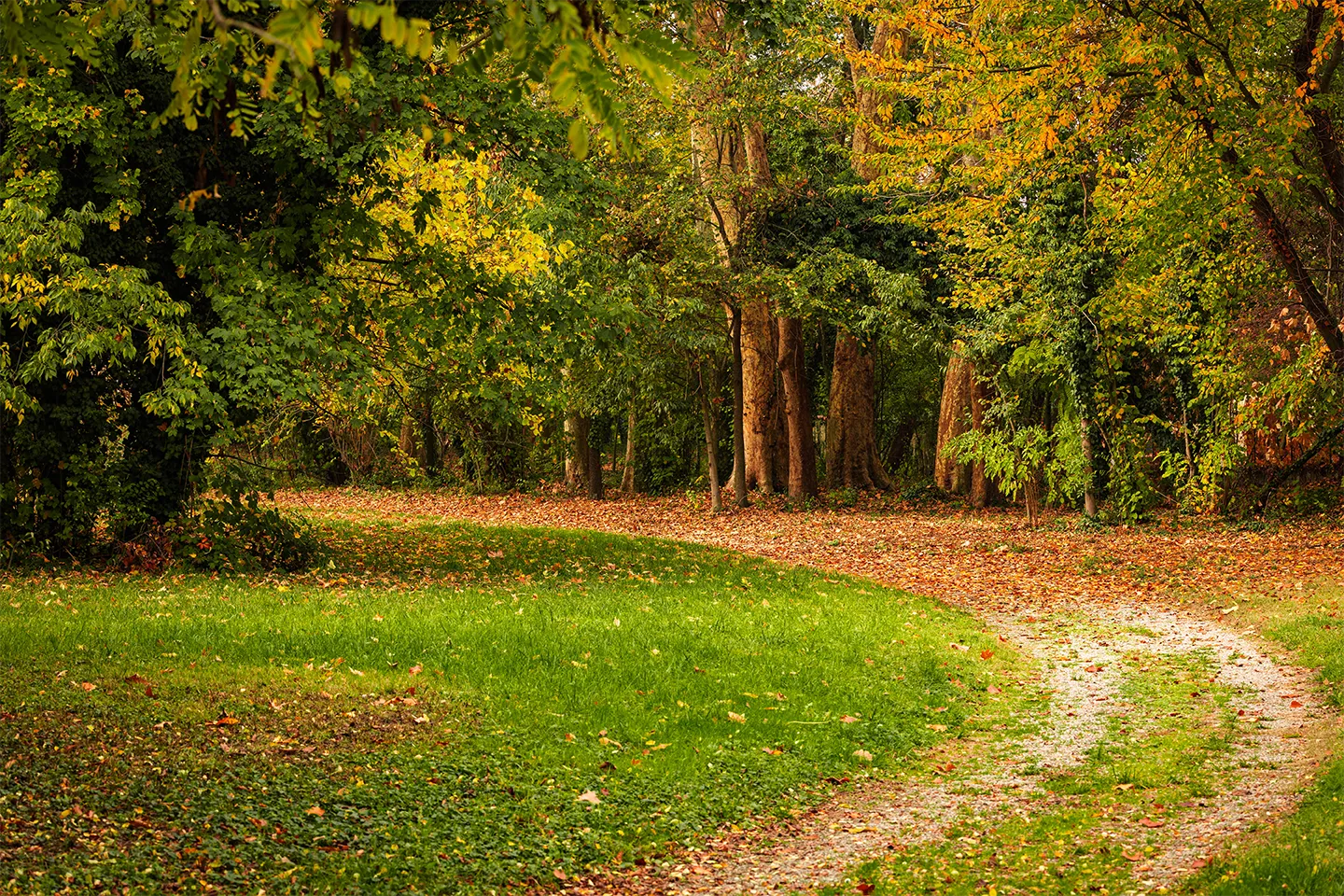
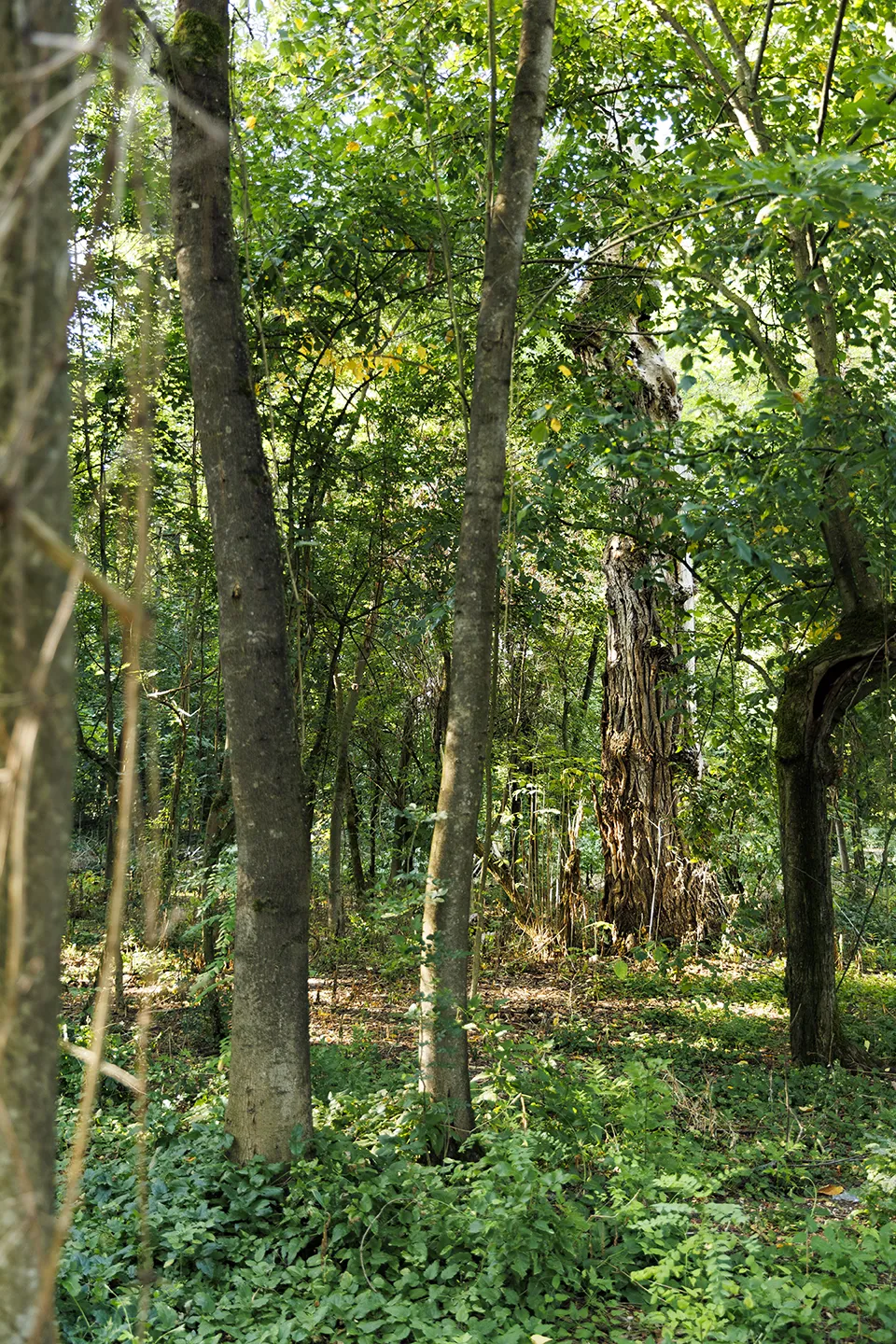
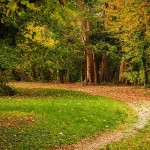
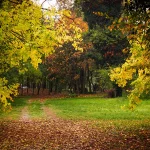
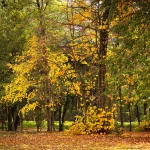
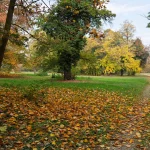
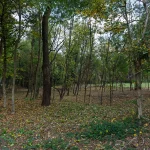
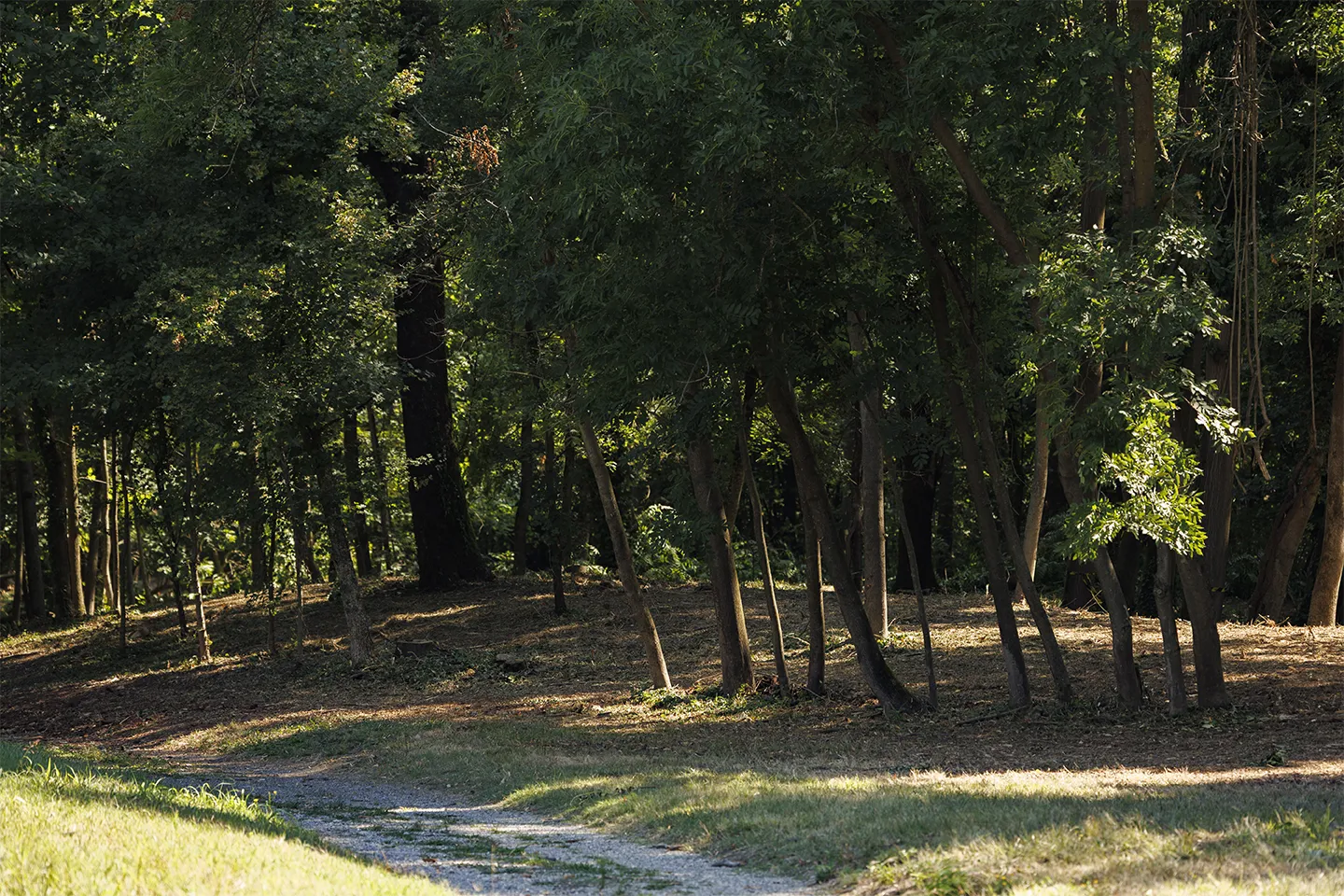
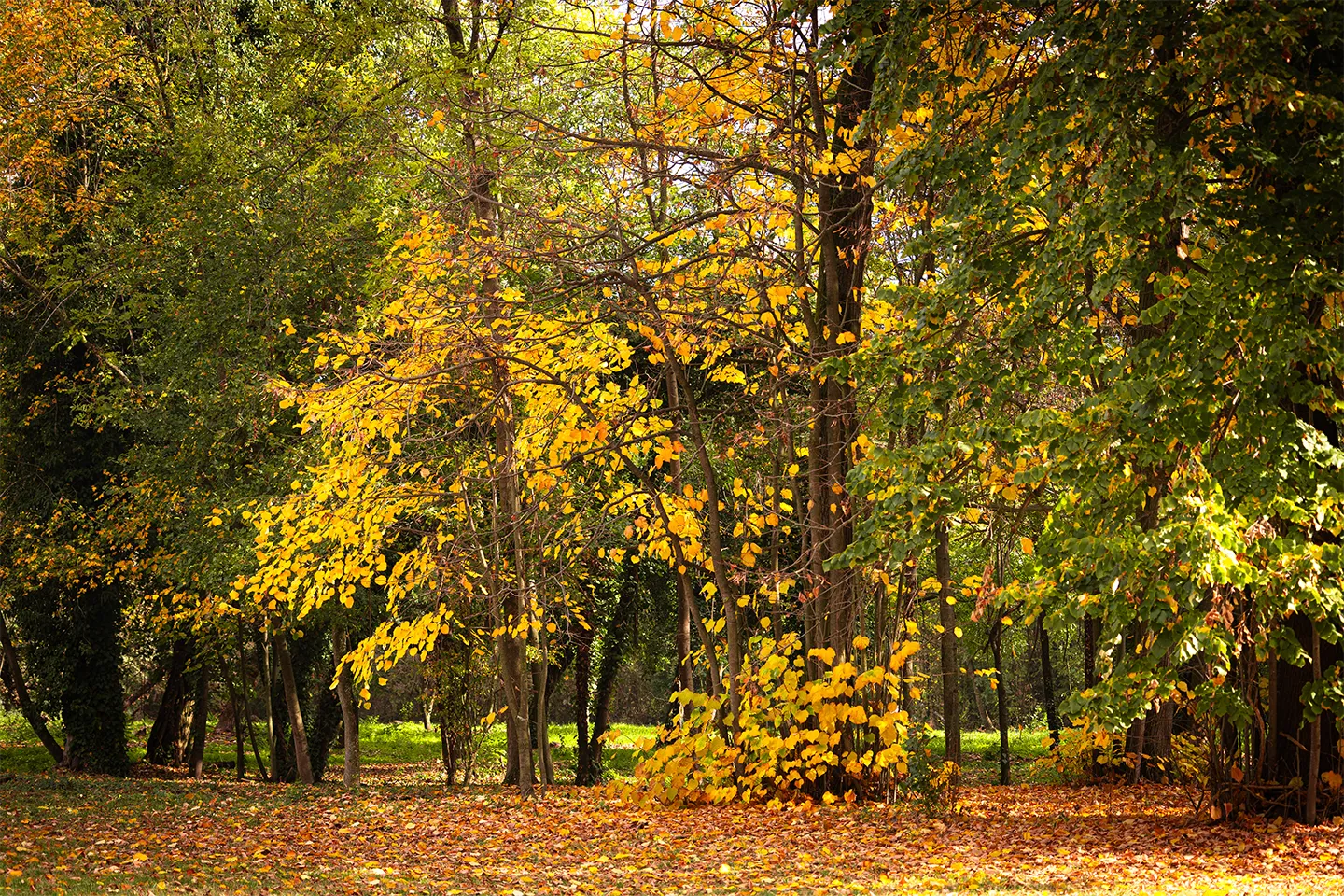
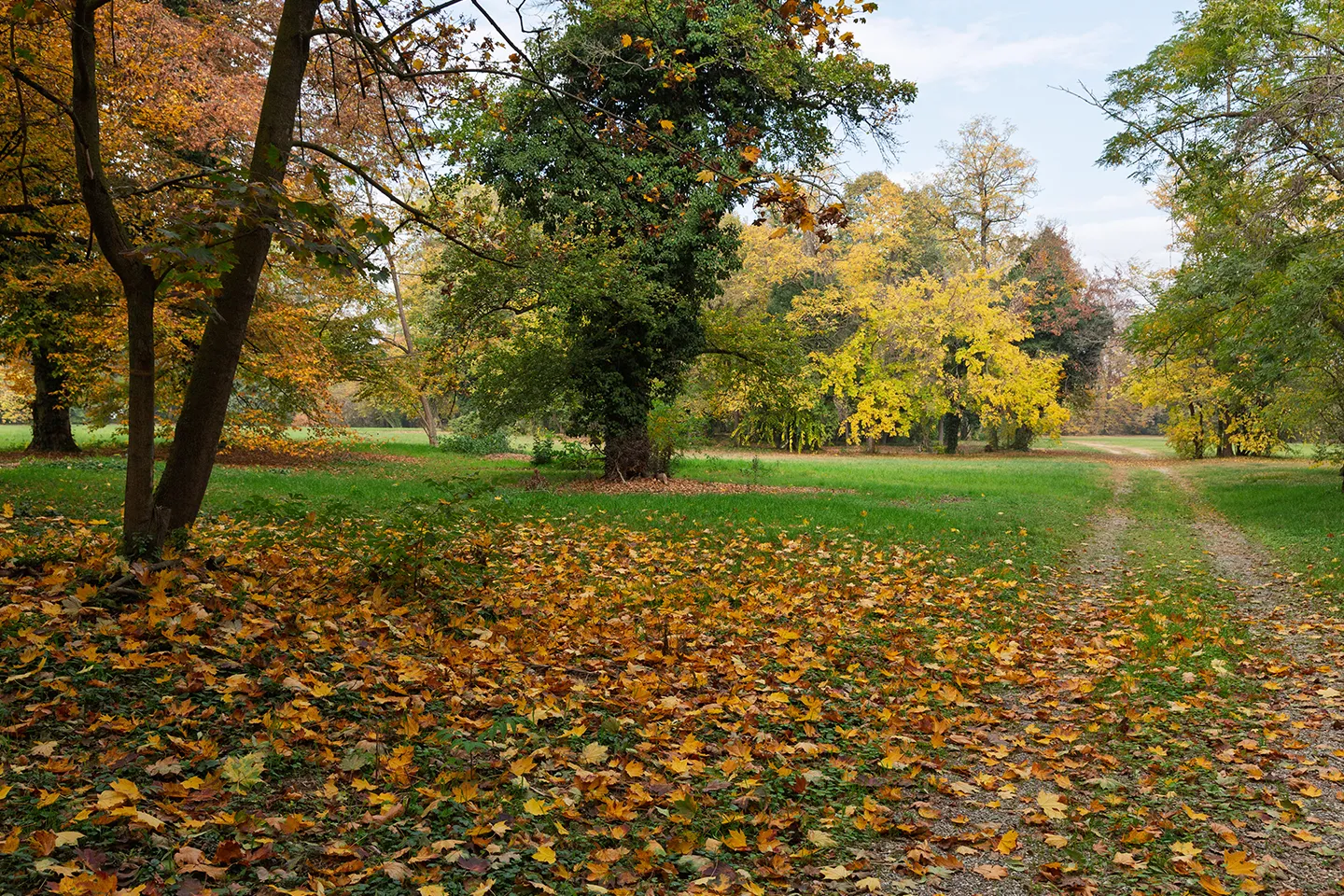
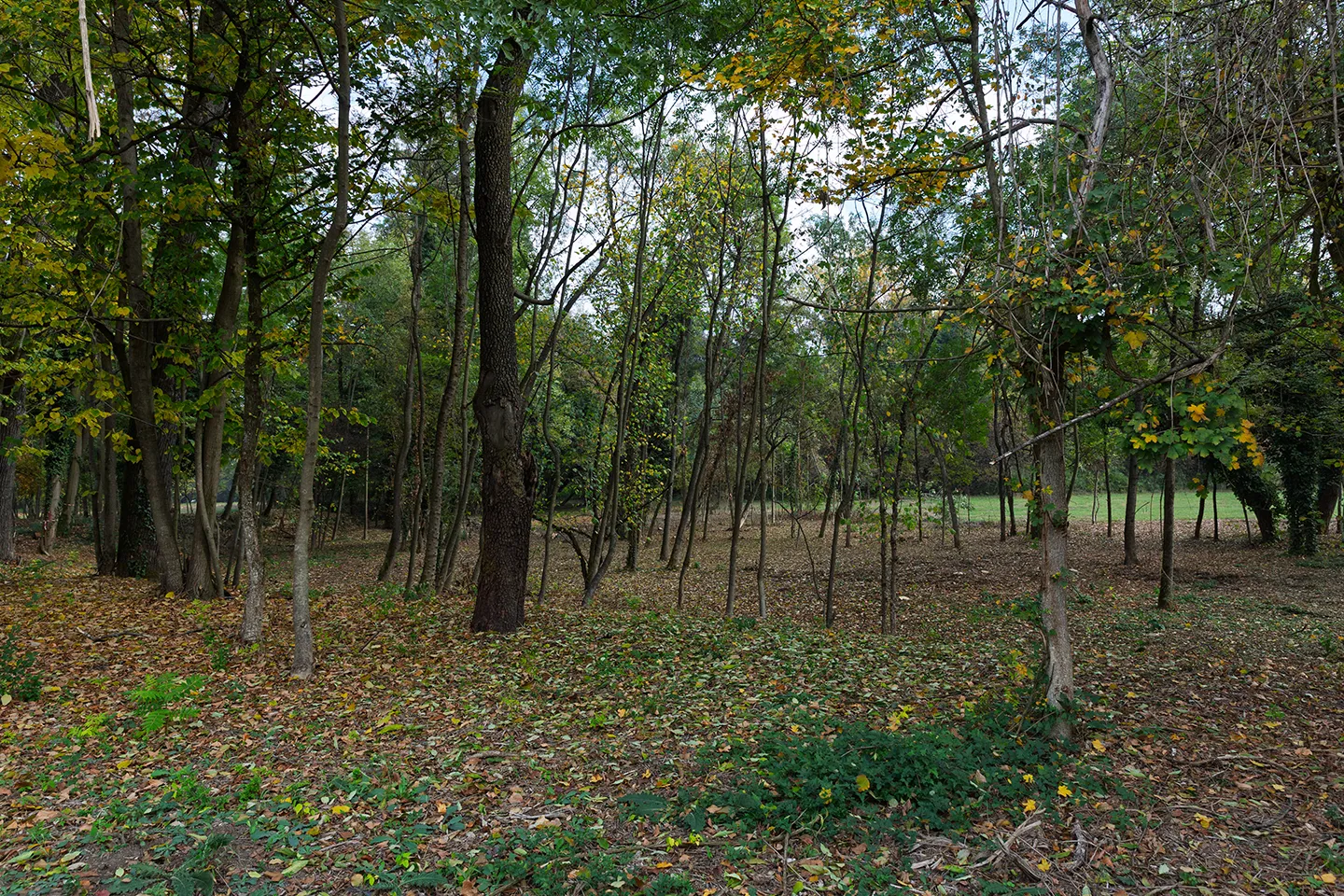
In the park, there is a special place where the Romantic garden gives way to a more authentic and wild nature: the forest, which covers nearly two-thirds of the entire estate. It is not just a backdrop, but a fundamental element of the landscape, a natural transition between the historic park, the surrounding countryside, and the Parma stream.
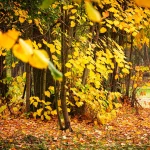
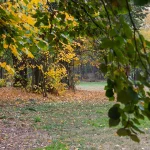
Entering the wood means crossing a threshold where the air, light, and atmosphere change. The environment becomes cooler and more humid, filled with the scent of earth and leaves. Here grows the typical vegetation of the lowland forests of the Po Valley, where oaks, hornbeams, elms, field maples, ash trees, and wild cherry trees coexist.
Around the trunks, shrubs such as hazels, hawthorns, dogwoods, and cornels intertwine, while brambles and vines create a natural weave that envelops the paths.
An ecosystem in balance
The undergrowth hosts a surprising mosaic of herbaceous species
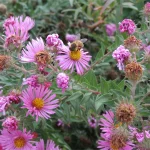
Periwinkles, violets, anemones, cyclamens, and many other seasonal blooms alternate throughout the year, providing food and shelter to a rich and diverse fauna. This place is a true balanced ecosystem, where the tree canopies retain moisture, the roots stabilize the soil, and fallen leaves transform into valuable humus.
The biodiversity of the woodland is extraordinary
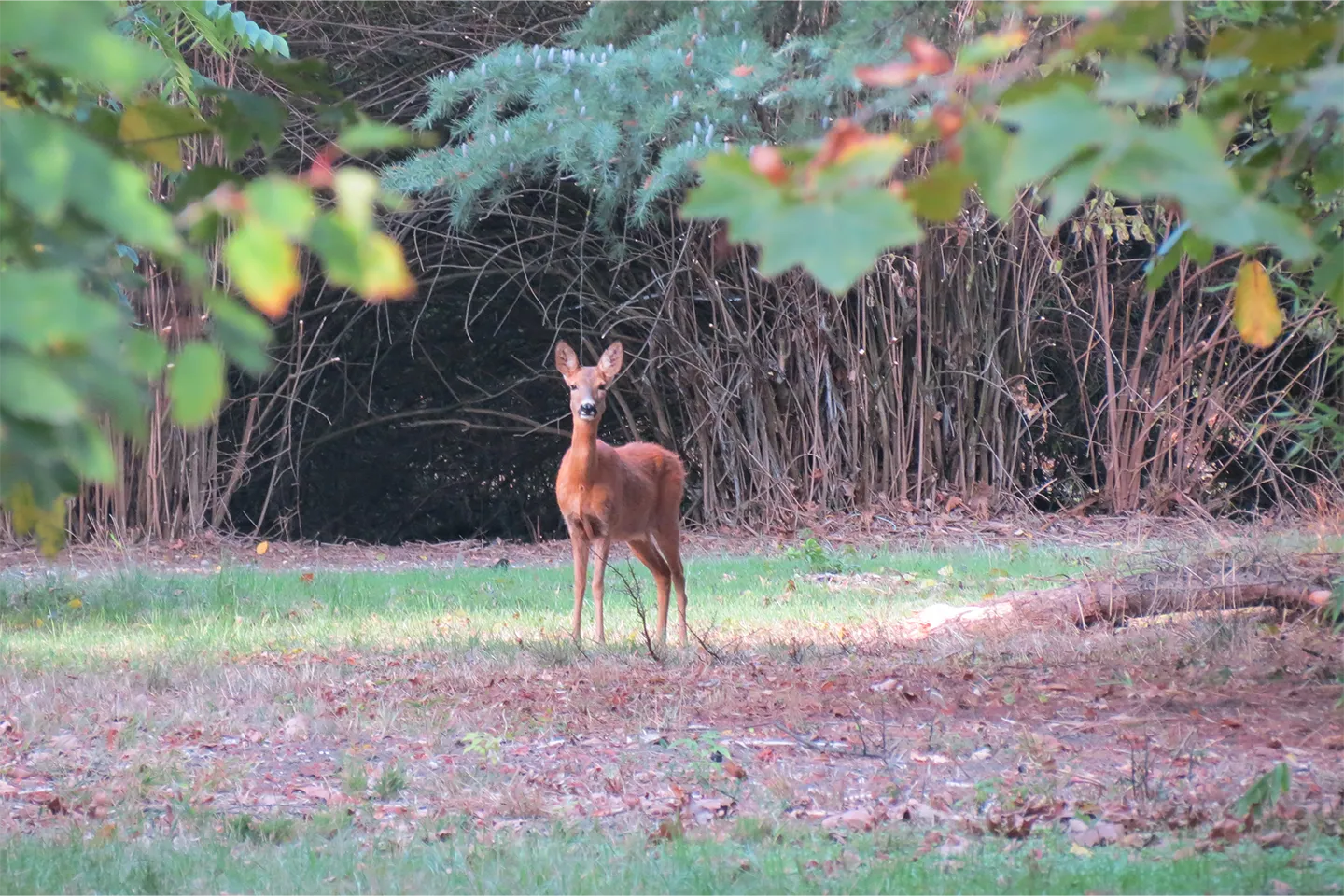
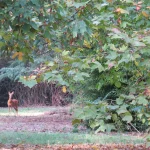
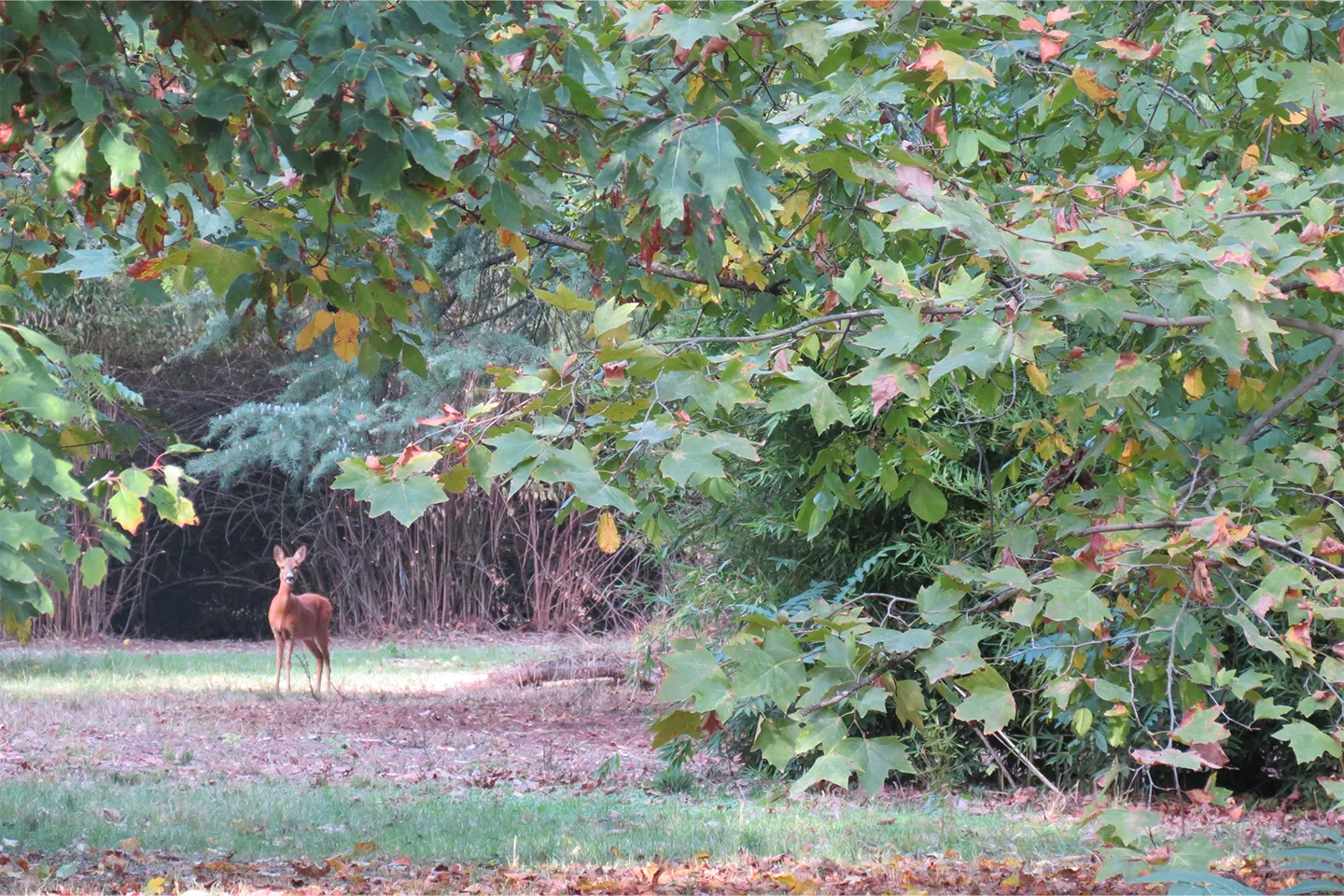
Hedgehogs, squirrels, owls, woodpeckers, pheasants, and many other species inhabit this environment. Occasionally, larger animals – badgers, foxes, deer, wild boars, and sometimes wolves – also appear, drawn by the stream’s water and the richness of the undergrowth. Every footprint and rustle tells a story.
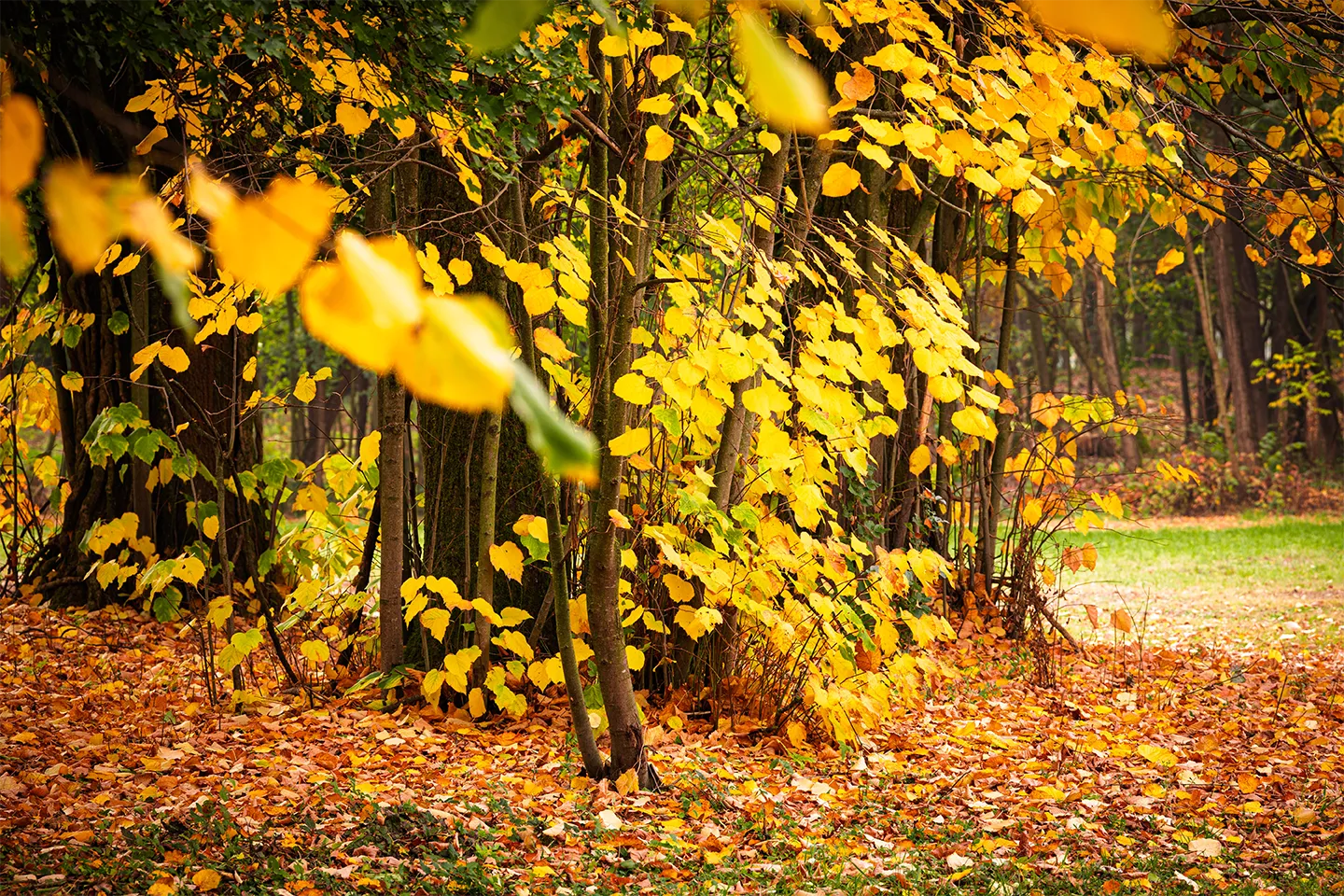
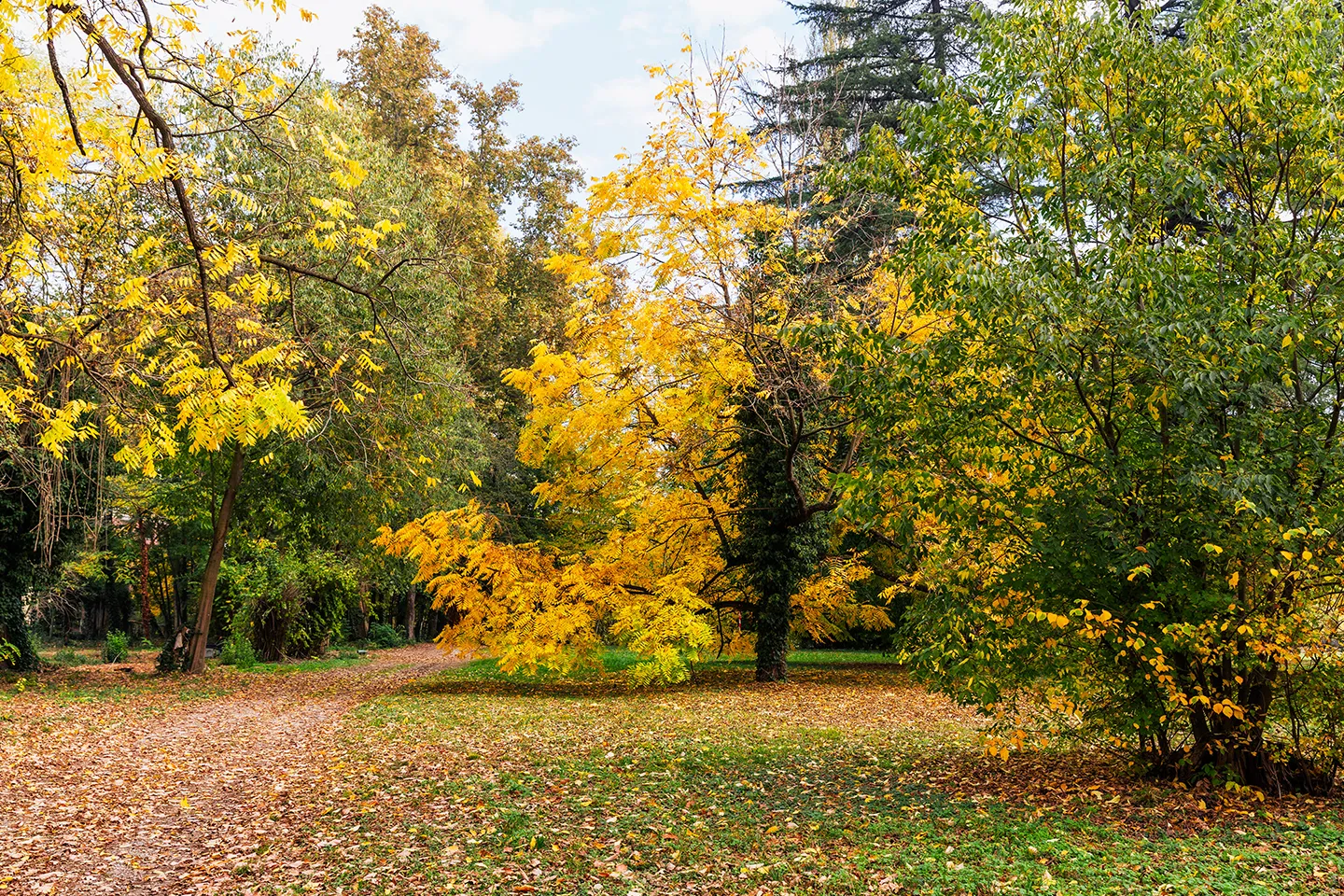
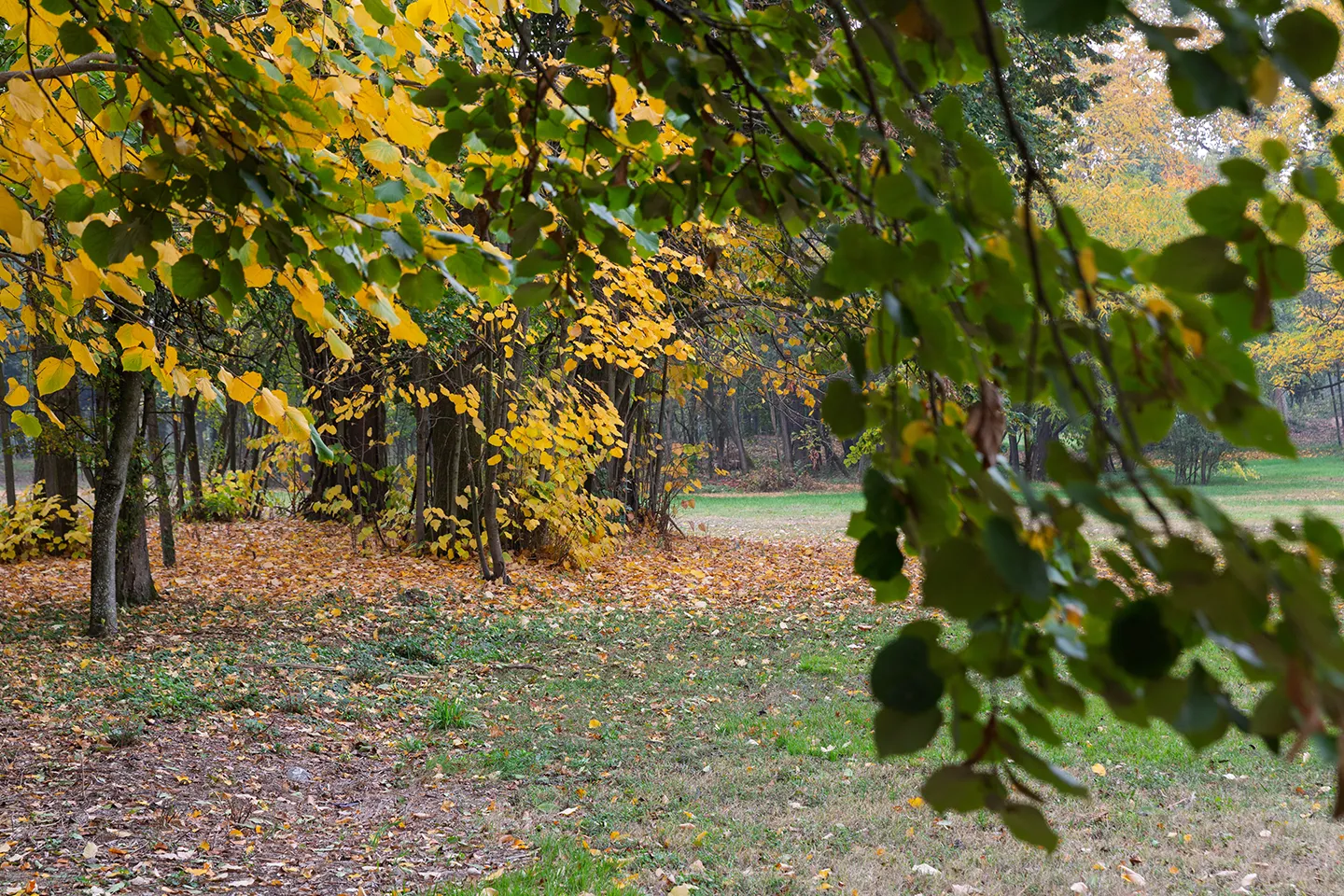
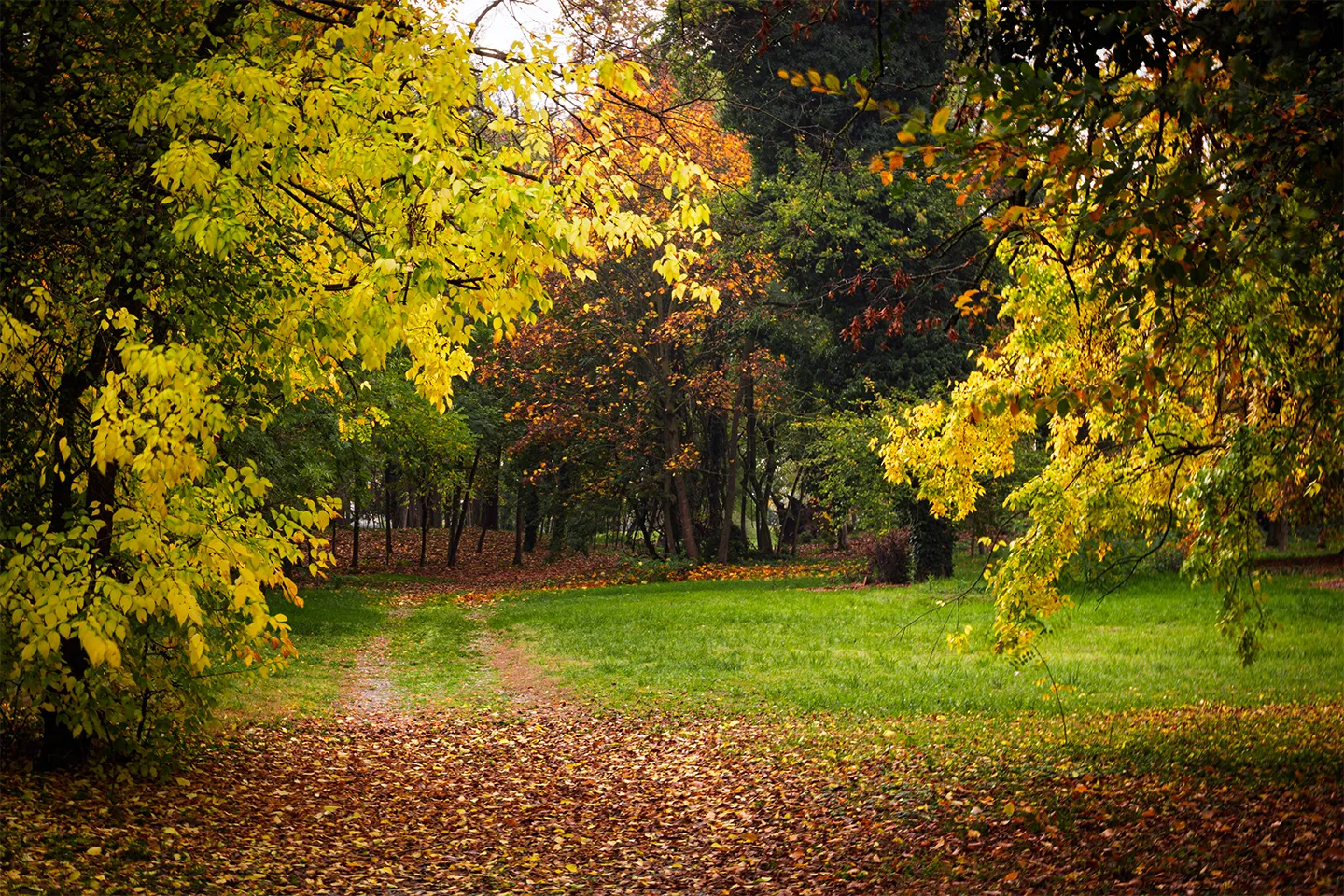
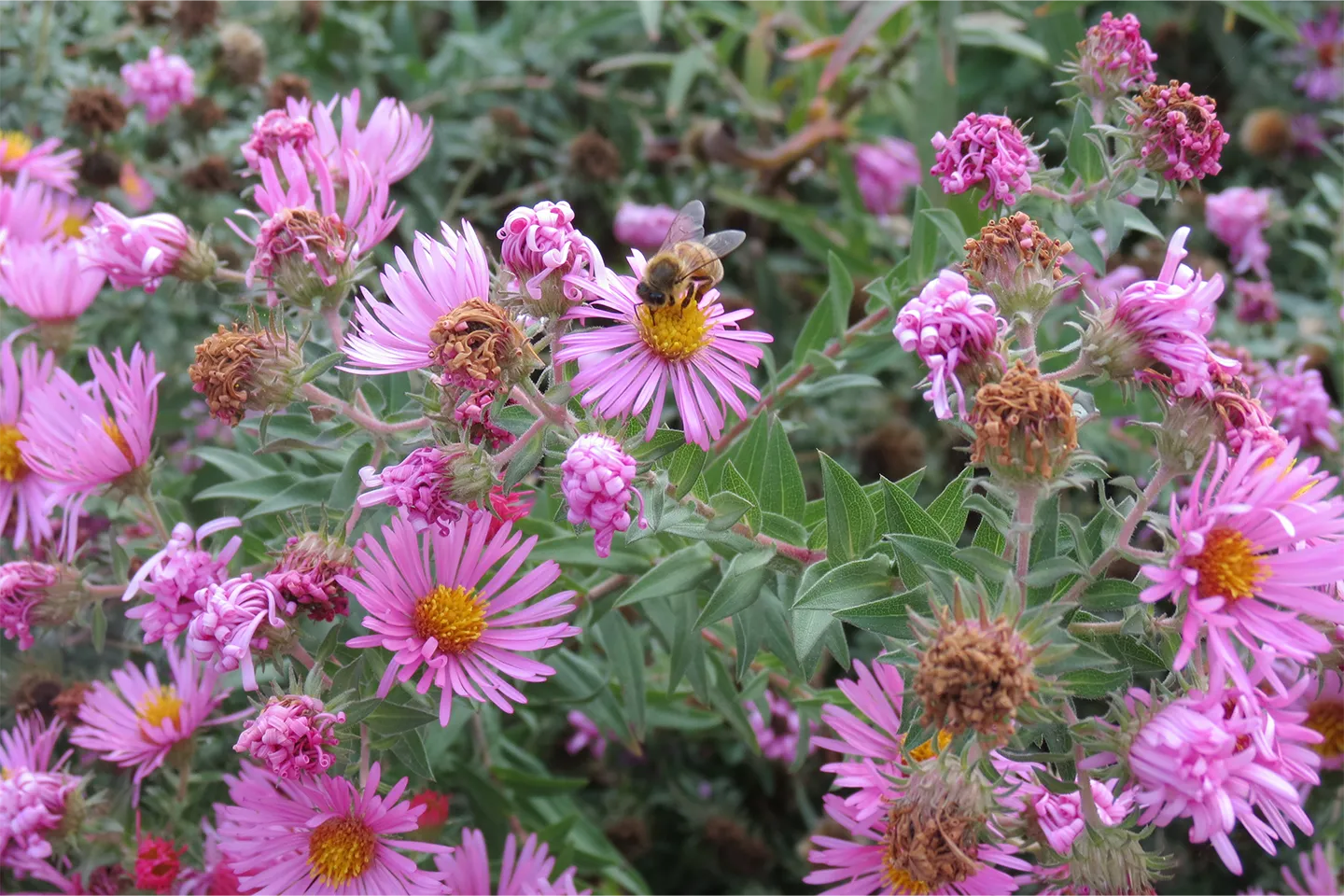
In spring it blooms delicately, in summer it fills the air with the scent of herbs and catmint, and in autumn it glows with warm, deep colors. It is the most intimate and secret part of Villa Meli Lupi di Soragna Tarasconi, where the garden becomes landscape and the landscape becomes emotion.
Those who walk among these trees enter a place that does not follow the rush of time: a living environment that continues to breathe as it always has, guiding visitors on a slow and authentic journey through nature.
Villa Meli Lupi offre visite guidate alla Casa Museo dedicata all’Ambasciatore Antonio Meli Lupi di Soragna e al Parco Romantico. Il complesso storico è visitabile solo su prenotazione nei mesi di Maggio, Giugno, Luglio, Settembre e Ottobre.