Strada Martinella, 326 - 43124 Parma, Emilia-Romagna | Aperture su prenotazione nei mesi di Maggio, Giugno, Luglio, Settembre e Ottobre | Visits by appointment in May, June, July, September, and October
Strada Martinella, 326 - 43124 Parma, Emilia-Romagna | Aperture su prenotazione nei mesi di Maggio, Giugno, Luglio, Settembre e Ottobre | Visits by appointment in May, June, July, September, and October
A historic tree that tells a story of memory and resilience
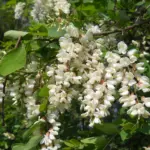
In the historic park grows a remarkable presence: the old Robinia pseudoacacia. Native to North America, the robinia arrived in Italy in the early 17th century as a botanical curiosity and was immediately valued for its extraordinary vigor. It grows quickly, withstands drought, and adapts even to poor soils. Over time, it spread spontaneously, colonizing field edges and degraded woods, becoming a naturalized species perfectly integrated into the Italian landscape.
Traditionally, it was not a main feature in historic landscape gardens, but here it represents a remarkable exception.
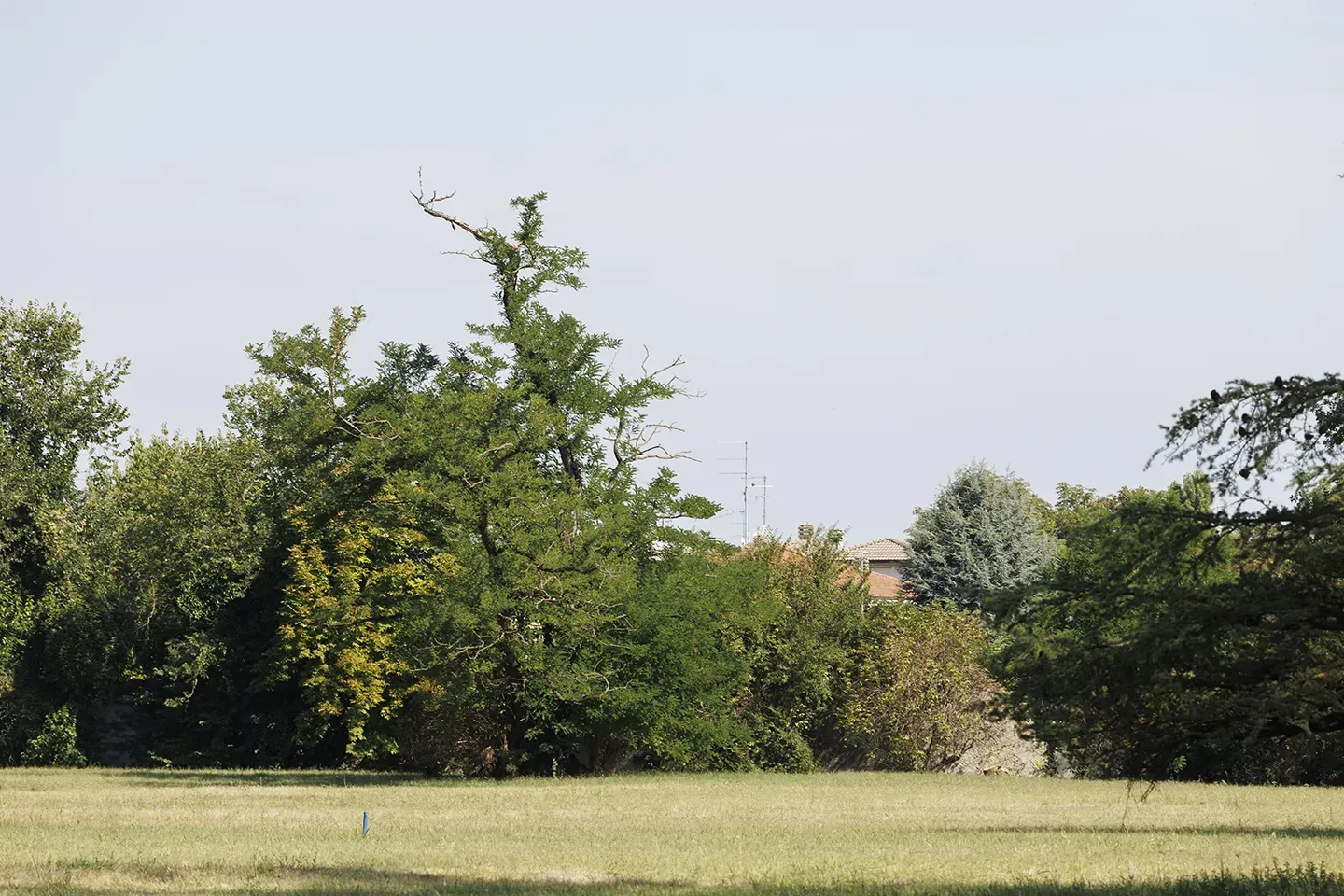
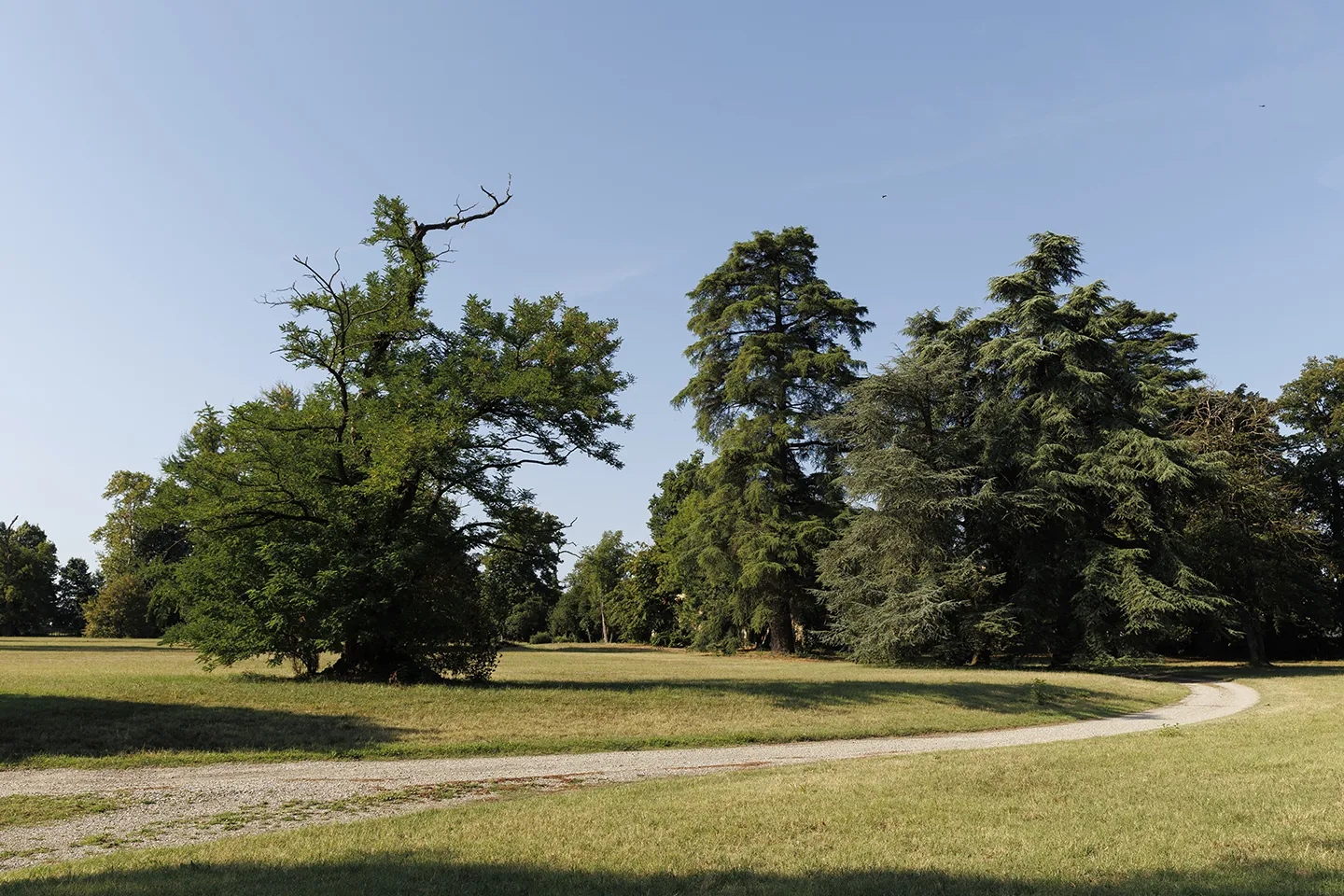
The tree was planted by the grandmother of the current owner, Marquis Raimondo Meli Lupi, and has since accompanied generations of the family, providing shade and shelter beneath its elegant canopy.
Resilience
An unusual size
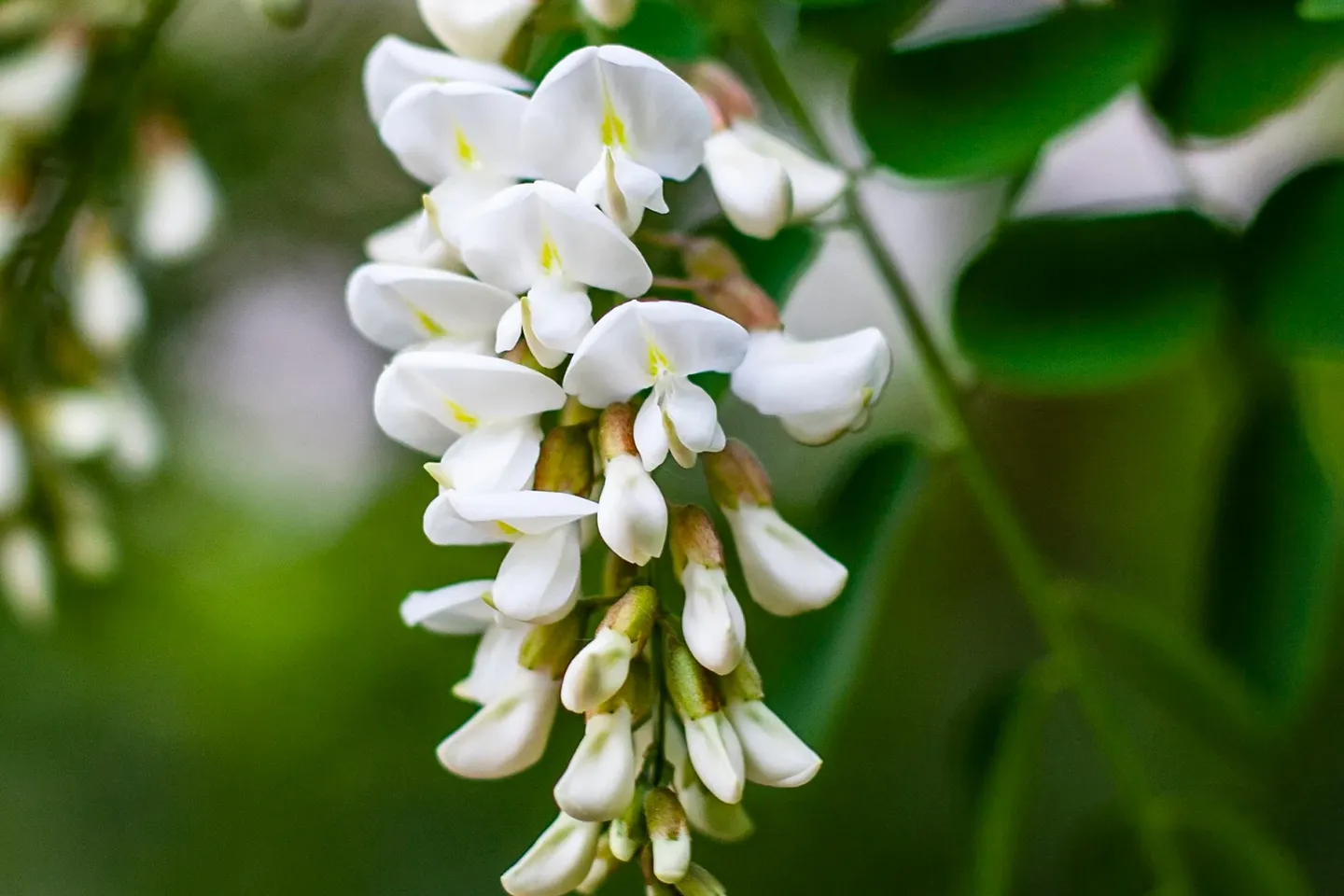
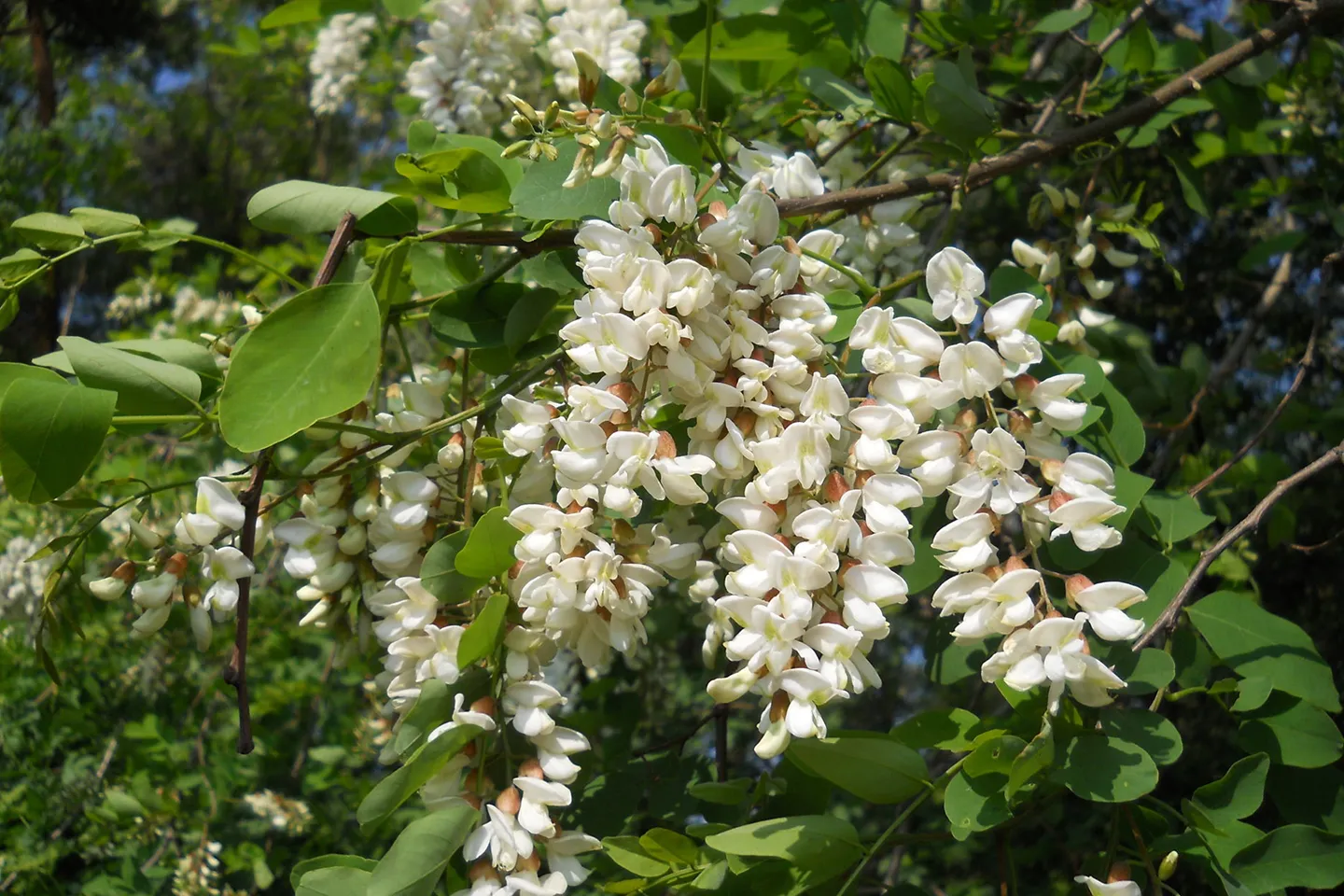
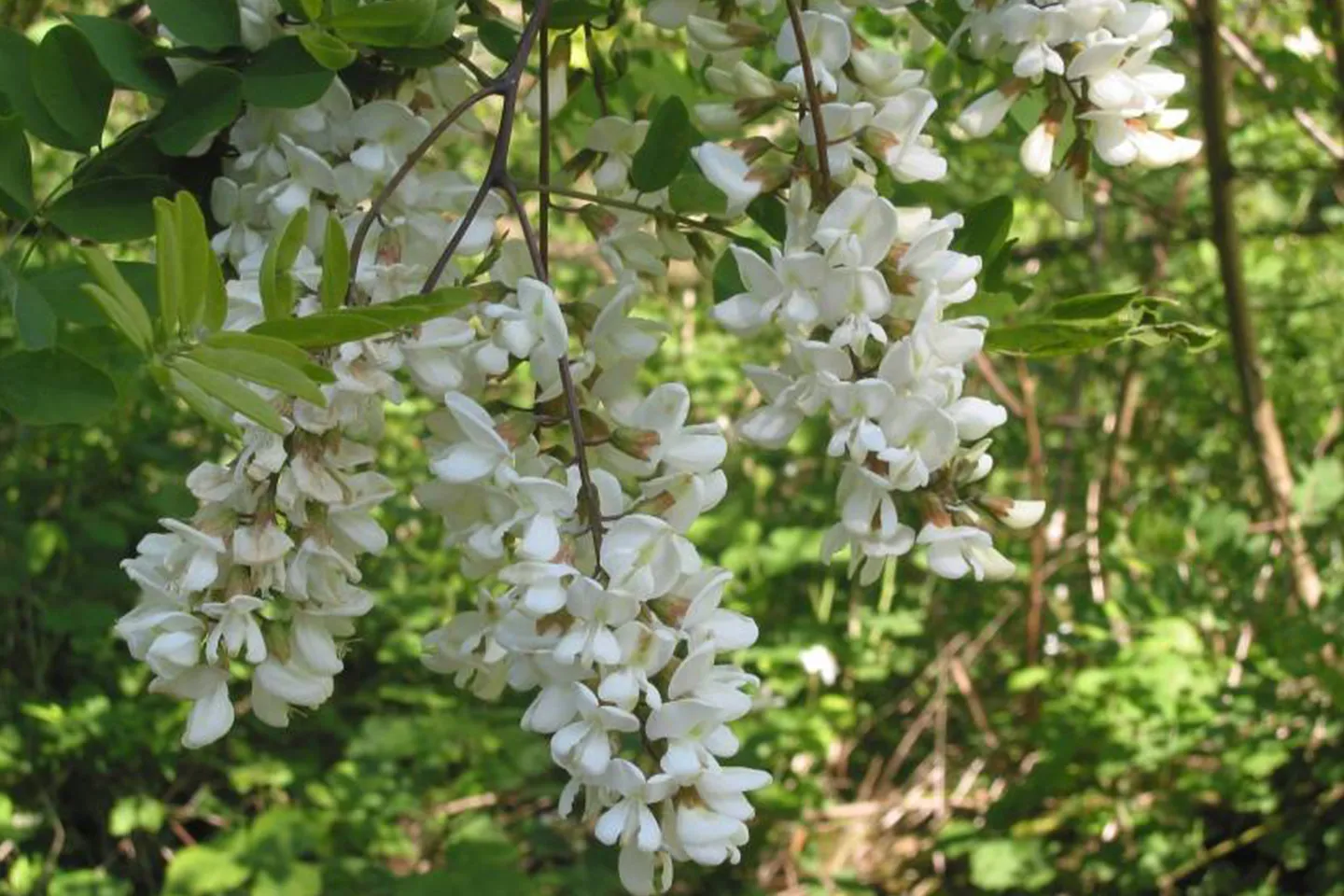
Today, the trunk of the robinia reaches a circumference of 145 centimeters, an unusual size for this species. Its compound, light, and elegant leaves turn a warm, luminous yellow in autumn, while in spring it produces long, pendulous clusters of fragrant white flowers, rich in nectar, attracting bees and pollinating insects.
Despite the marks of time – the tallest and oldest part of the canopy struggling as the roots have difficulty transporting water – the robinia shows remarkable resilience. It is slowly rebuilding itself, lowering its center of gravity and forming a more compact canopy. The estate carefully monitors this natural process, without forcing growth, allowing the tree to continue living according to its own rhythm.
A symbol of resilience
The old Locust tree is more than just an ornamental tree: it is a symbol of resilience, memory, and affection, capable of telling the story of the villa and the family that has cared for it over the centuries. It is an example of how nature and human stewardship can coexist harmoniously, leaving a lasting mark on the historic landscape.
Villa Meli Lupi offre visite guidate alla Casa Museo dedicata all’Ambasciatore Antonio Meli Lupi di Soragna e al Parco Romantico. Il complesso storico è visitabile solo su prenotazione nei mesi di Maggio, Giugno, Luglio, Settembre e Ottobre.